How a Water Softener Works
How a water softener works
Hard water is so called because of the minerals and other contaminants it picks up on its way from the sky to your home, such as calcium and magnesium. A water softener works by removing the magnesium and calcium present in your water supply through a process of ion exchange, turning it from hard water to softened water.
Twin tank design
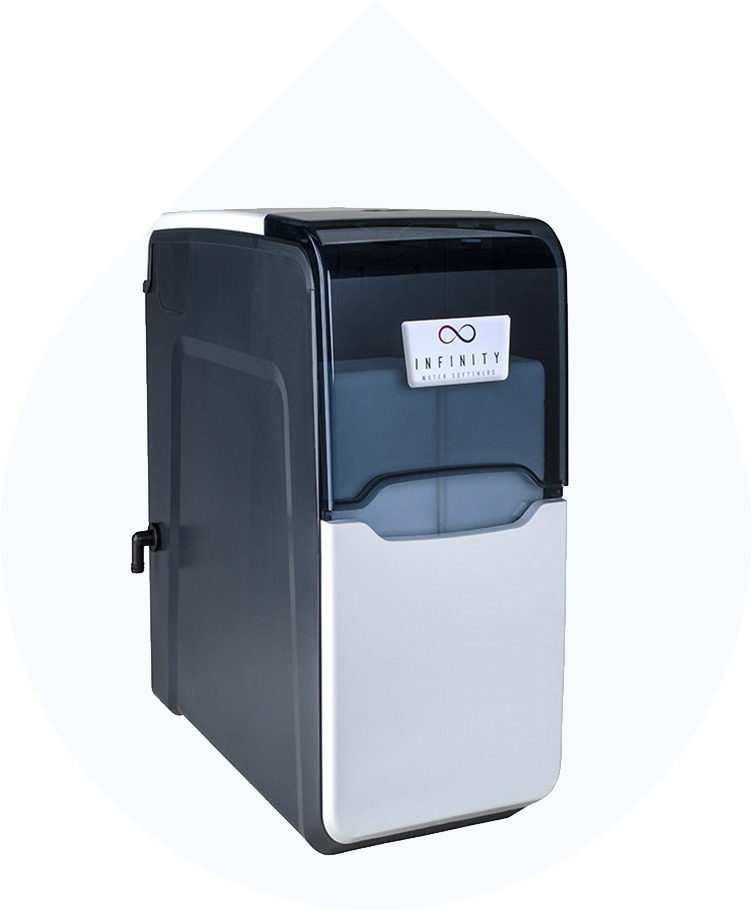
Our softener has two cylinders to soften your hard water. A ‘twin cylinder’ water softener is the only system which guarantees soft water all day, every day.
As the hard water passes through a tank filled with tiny food grade resin beads, the calcium and magnesium minerals stick to the resin particles and the water is ‘softened’. Once the tank is full of calcium and magnesium minerals it starts to regenerate and is cleaned with a brine solution which is flushed down the drain. It does not enter your water supply. The water softener switches immediately to the second cylinder and continues to soften your water. The resin beads are then rinsed with soft water to ensure there are no traces of salt. (For explanation of why you need salt, please see below) The water softener is now ready to continue softening your hard water.
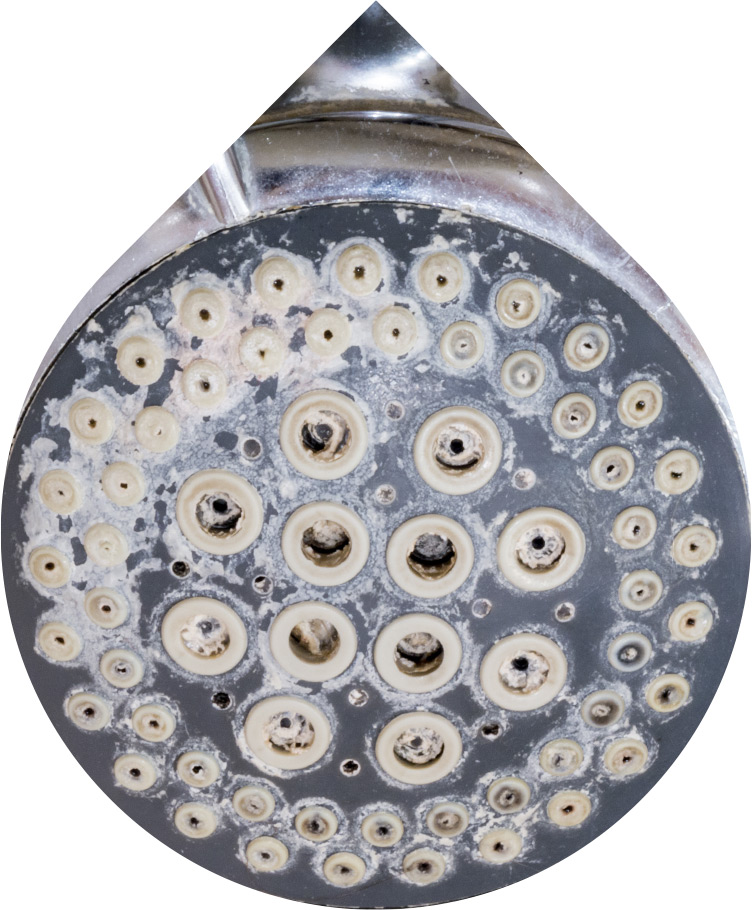
While not necessarily harmful to you, those deposits are certainly harmful to your home. Soft water is simply that same water, but with those added, unwanted extras stripped out.
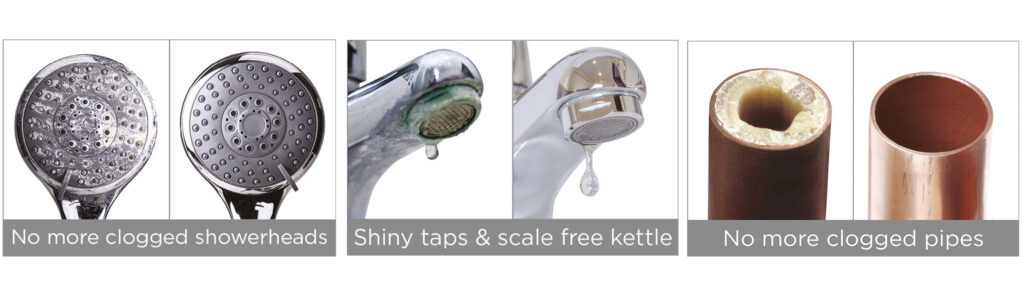
Unlike hard water, softened water does not damage your home’s piping, or cause a build-up of scale in your appliances, reducing their effectiveness and lifespan.
By softening your water, you can protect your home from harmful build up while also eliminating limescale (which is only present with hard water) and improve your family’s skin and hair, too.
Salt
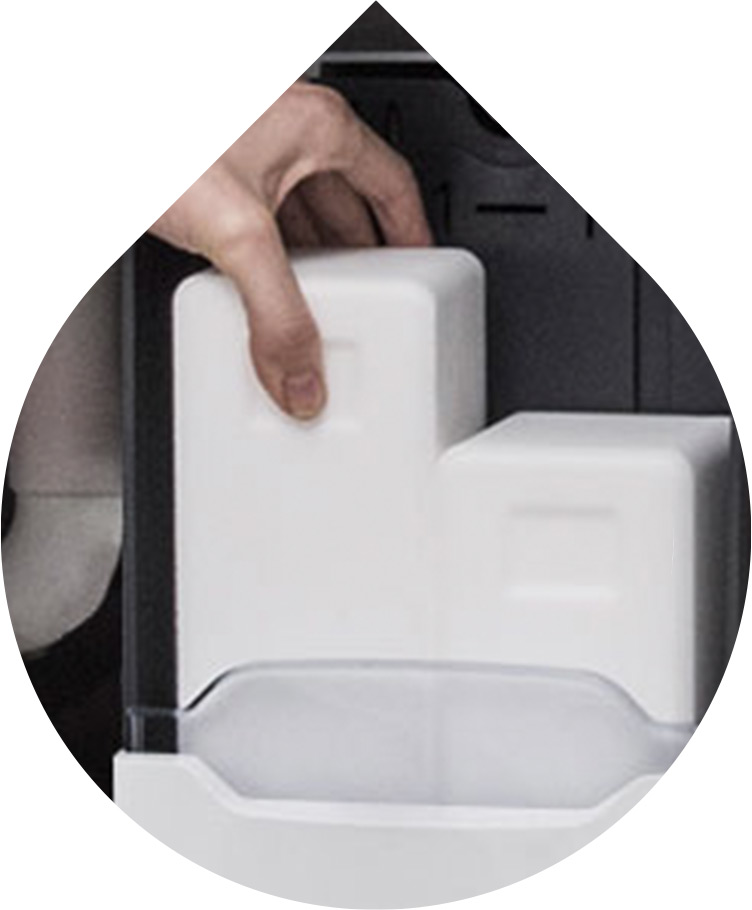
Block salt is an essential element of your water softener, but importantly, the only consumable and running cost associated with having a softener installed. The salt you add to your softener is purely used as a flushing, purging agent. It does not, under normal operating conditions, enter the water supply to your home. Salt is dissolved to create a brine solution. After a set amount of water has been run through your softener, the machine is full of trapped hardness minerals. The brine solution is sucked up through the softener, flushing the trapped hardness minerals away. This process is called regeneration. Your water softener will automatically regenerate when needed, which will ensure you receive a constant and uninterrupted supply of beautiful soft water.
Limescale
Soft water is gentle on your skin and hair, can alleviate the symptoms of eczema.
While calcium and magnesium are considered to be beneficial to our health, they’re precisely the opposite to your home. Those chalky deposits around your taps, on your sink, clogging up your shower heads and making your appliances run less efficiently are not only unsightly, they’re costly too. Then there’s the unpleasant scummy film on the top of your cups of tea and coffee.
Yes, limescale can be scrubbed off for temporary relief, and you can use descaler in your kettle, but the only way to get rid of it completely is to soften your water.
Get soft water in your home today!
Get in touch with us today to get a free quotation for the supply and installation of a Water Softener system for your home.